An AI vendor sells you a vision. A sharp deck, a pilot that works in a demo environment, and a promise that your team will move faster once the platform is live.
Then you sign, and your engineers are fixing what the AI got wrong, your product team is rewriting specs it misunderstood, and your operations lead is managing its output. The vendor delivered software, but your team is still doing the work.
Here's how to separate real operational capability from vendor hype before you commit budget or headcount.
What does operational capability actually mean in an AI partner?
Operational capability means the AI partner delivers finished work you can use, not components your team has to assemble.
A vendor with operational capability takes a business input (a product spec, a support ticket, a campaign brief) and returns a business output: merged code, a resolved customer issue, a launched ad set. Your team approves and directs. The vendor's platform does the execution.
A vendor without it gives you a chat window and maybe some templates. Your team directs every step, checks the logic, fixes the errors and turns raw output into something you can ship. You bought software. You're still the operator.
The simplest test: ask what your team stops doing after the platform is live, and what new tasks they pick up to make it work. If the new tasks sound like project management, QA or production coordination, the vendor is offloading operations onto you.
Look for end-to-end workflows, not isolated tools
Some vendors solve one step in a process (generate a draft, surface an insight, score a lead) and stop. You handle everything before and after. Real operational capability means the platform owns the whole workflow, from the input to an output you can act on.
That looks like an AI that goes from a feature spec to a pull request ready for human review and merge, not a code snippet you paste into an editor. It's a system that takes a product launch and writes the go-to-market plan, the ad copy and the sales brief, with approval gates but no manual handoff between stages.
The workflow test. Draw the process today, then ask the vendor to show you the same process with their platform. If your team's steps don't shrink to approve, reject or decide, the vendor is selling point solutions that make your process longer, not an operational partner that makes it faster.
Ask for proof of work before the sales cycle ends
Vendors with operational capability show you what their platform built. Vendors without it show you how the platform works.
Before you evaluate pricing or terms, ask to see output the AI produced without heavy human intervention: code the platform wrote and a customer deployed, copy it generated and a team launched, replies it drafted and a support team sent. Work done for a customer with your use case, not demo examples. If every example comes with a story about the customer's team "refining" or "guiding" the output, the platform has potential, not operational capability yet.
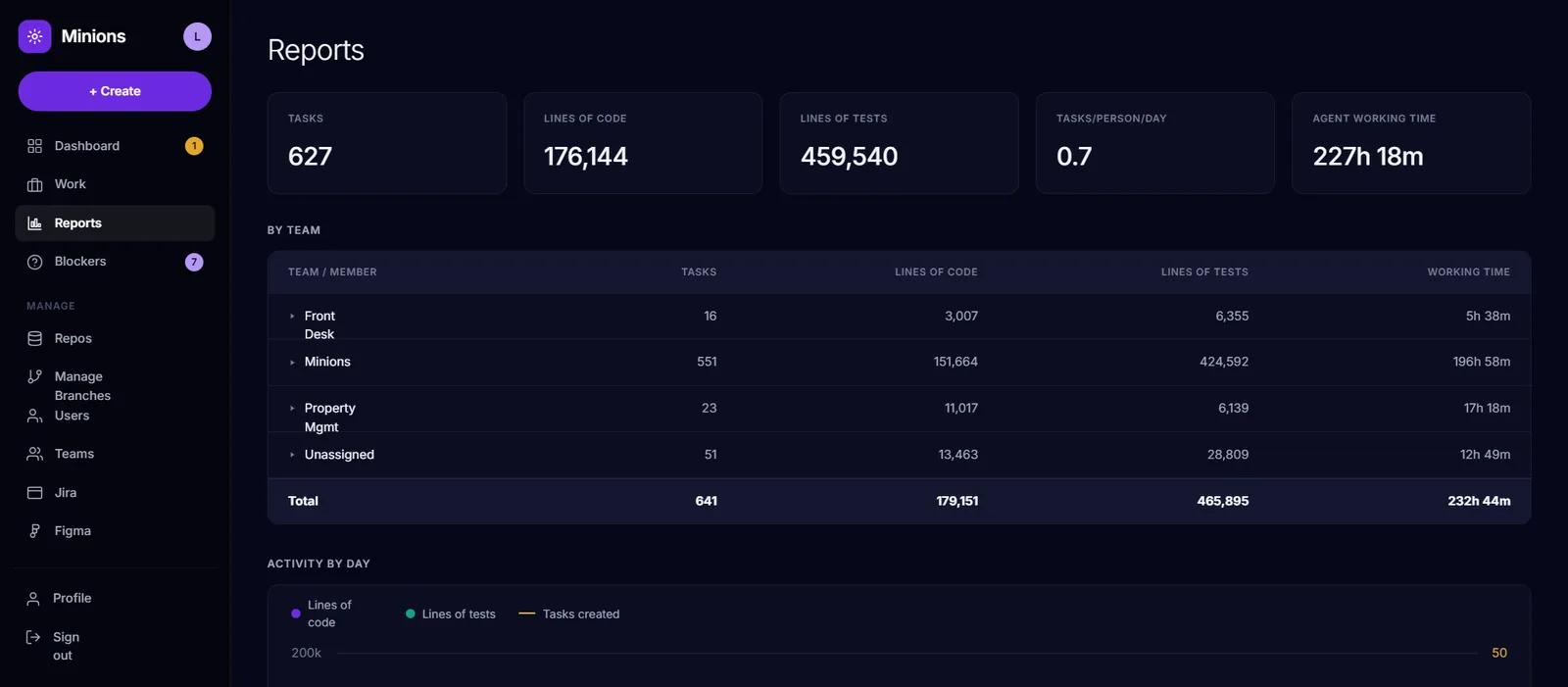
The proof test. Ask how much of the AI's output ships as-is versus needing revision, and how the vendor measures that. If they can't answer, the platform likely isn't producing work your team trusts yet.
Verify the AI maintains context across your operations
Some AI tools start from zero with every request. You paste in background, describe your business and explain what you need, then do it again the next time.
An AI partner with operational capability holds context. It knows your codebase, your brand voice, your product roadmap, your customer history. When you launch a feature, the AI that wrote the code also writes the launch plan and briefs sales and support.
If a vendor offers separate tools for development, marketing and customer operations, ask how they share information. If the answer is "export from one and import to the next" or "we have an API you can use to connect them", those are isolated tools, and your team is the connecting layer.
The context test. Describe a workflow that crosses functions — a feature launch that touches product, marketing and sales, or a pricing change that affects billing, support and your website. Ask the vendor to show you how their platform handles it end to end. Real operational capability requires one system, one context and no manual handoff.
Understand where you stay in control
The fear with operational AI is losing control. The platform does the work, but what if it does the wrong work?
Some vendors avoid this by giving you software that does nothing without detailed human input, so you're still doing the work. Vendors with operational capability use approval gates: the AI completes the task, you review and approve, nothing ships without your decision. You approve the plan before the AI writes code, review the pull request before it merges, and see the campaign before it launches. The AI did the work; you make the call.
Ask the vendor where the approval gates are, and whether you can add more or move them earlier. If adding oversight means rebuilding the workflow yourself, the vendor hasn't thought through how operational AI actually runs in a business.
The control test. Ask what happens if you reject the AI's output. Does the platform iterate and try again, or does it hand the task back to your team? A vendor with real operational capability can tell you exactly what happens next.
Evaluate the vendor's implementation model
A vendor that promises operational capability but requires a long setup project, a dedicated AI team on your side and custom configuration for every workflow isn't delivering operational capability. They're handing you a construction project.
One good sign is a fixed-scope first step that lets you see the work before you commit to a full build: the vendor works with your team on one problem, then shows you working output, the value case and the timeline before you allocate budget or headcount. If the first step is a contract for platform access and the second is "work with our team to configure your workflows", they're selling software, not operational capability.
The implementation test. Ask how long it takes to go from signed agreement to your first deployed output — code in production, a launched campaign, a resolved ticket.
Why output without the org chart matters now
You're evaluating AI partners because your team is stretched. Revenue targets went up, roadmaps got longer and hiring slowed or froze. You need more output, and you can't add headcount to get it.
A vendor with real operational capability does the work instead of just speeding up yours. Your engineers approve pull requests instead of writing every line. Your marketing lead reviews campaigns instead of drafting every asset. Your support team handles escalations, and the AI closes the repeatable cases once the knowledge base can back its answers. Make sure the platform actually delivers that, or you'll spend time managing AI instead of shipping work.
How CharlieIQ answers these tests
CharlieIQ is an AI operational suite: Dispatch plans, Minions builds, LaunchPad markets, CallPilot sells, and Support Copilot serves. Here is how it answers each test, so you can hold us to the same standard.
The workflow test. Dispatch reads your site, your GitHub and Jira history, and your Intercom and HubSpot data, all read-only, and returns five to eight ranked opportunities with the evidence linked. Minions takes a Jira ticket through seven specialized roles to a reviewed, tested pull request. LaunchPad drafts campaigns, CallPilot coaches calls and drafts the follow-up, and Support Copilot categorizes and routes tickets. At each stage, your team approves, redirects, or decides.
The proof test. The AI Sprint puts two specialists on-site with the people who do the work, then builds and demos over four weeks. You finish with a working proof of concept on your own data, a value case sized in your metric (cost, cycle time, error rate, or capacity), and a live demo, with no obligation beyond the sprint. Once you're running, Minions reports tasks shipped, cost per task, and time per task by team.
The context test. Nexus is the shared memory behind the suite. The products read from and write to the same place, so a fact settled in one holds in the others. A theme that keeps coming up in sales and support conversations can surface as something worth building, and when something ships, the products that market, sell, and support it already know what changed.
The control test. The gate sits where a mistake would cost the most, so it's different in each product:
- Dispatch is read-only, always. A person chooses which opportunity gets staffed.
- Minions has two gates: you approve the spec before anything is built, and you approve the merge.
- LaunchPad drafts campaigns, posts, and pages, and a person approves every publish.
- CallPilot coaches the rep on their own screen and drafts the follow-up for the rep to send. It writes call notes and CRM updates directly into your CRM.
- Support Copilot routes tickets from day one. Suggested replies and automatic resolution stay off until your knowledge base clears a coverage threshold, and it escalates to a person when the knowledge base can't back an answer.
The implementation test. CharlieIQ works inside the systems you already run: GitHub and Jira for Minions; Zoom, Teams, or Meet and HubSpot, Salesforce, Pipedrive, or GoHighLevel for CallPilot; Zendesk for Support Copilot. Your code, deals, calls, and tickets stay where they are. Minions indexes a repository in under an hour and opens pull requests the same day, and Support Copilot's categorization and routing go live as soon as Zendesk is connected.
Frequently asked questions
What is the difference between an AI vendor and an AI partner with operational capability?
A vendor with operational capability delivers finished, usable work (merged code, resolved tickets, launched campaigns) that your team approves. A vendor without it gives you software that requires your team to direct every step, check logic, fix errors, and turn raw output into shippable work.
How can I tell if an AI platform actually reduces my team's workload?
Ask what your team stops doing after the platform is live and what new tasks they pick up. If the new tasks sound like project management, QA, or production coordination, the vendor is offloading operations onto you instead of doing the work.
What should I ask an AI vendor before signing a contract?
Ask to see output the AI produced without heavy human intervention — code a customer deployed, copy a team launched, or replies a support team sent. Ask how much of the AI's output ships as-is versus needing revision, and request proof from a customer with your use case.
How does CharlieIQ maintain context across different business functions?
CharlieIQ uses Nexus, a shared memory layer behind the suite, so all five products (Dispatch, Minions, LaunchPad, CallPilot, Support Copilot) read from and write to the same place. A fact settled in one product holds in the others, with no manual handoff between functions.
Where does human approval fit into CharlieIQ workflows?
Approval gates sit where a mistake would cost the most: you approve the spec before Minions builds and approve the merge before code ships, approve every publish in LaunchPad, and Support Copilot escalates when the knowledge base can't back an answer. CallPilot drafts follow-ups for the rep to send.
Start with your loudest problem
If you'd like to put CharlieIQ through these tests, request a demo and tell us which problem is loudest. Or ask about the AI Sprint to prove it on your own data first.